Tag: Featured Articles

Filter By:
Sort By:
Innovation in Performance Auditing Processes in Light of Modern Technologies

The field of auditing faces challenges in keeping pace with unprecedented changes in perspectives and tools brought about by contemporary technologies resulting from technological advancements and the growing reliance on artificial intelligence tools. The information technology environment is no longer merely an assisting vehicle to improve audit quality; rather, it has become the primary driver for redefining the concept of auditing, as affirmed by INTOSAI in its professional pronouncements, which advocate for the development of audit tools and methods to align professional practice with the digital environment. This has prompted the Accountability State Authority (ASA), as the Organization’s chair, to move swiftly in this direction by putting forward pioneering initiatives, such as the Maat Initiative, which was brought up to the 25th INCOSAI agenda in Sharm El-Sheikh in October 2025. This initiative represents a contemporary vision that reflects the importance of utilizing artificial intelligence in the development of audit work, particularly in terms of performance audits that focus on evaluating the performance of government entities to verify the efficiency of public spending, thereby supporting governance and the protection of public funds.

Digital Governance and Technological Innovation in Performance Audits

The field of performance audit is transitioning from manual retrospective evaluations to real-time and prospective analysis due to the infiltration of technologies such as Big Data, artificial intelligence (AI) and predictive modelling, that is reshaping the efficiency and effectiveness of the audit function. As public institutions increasingly rely on data-driven systems for decision making, the complexity of governance frameworks also increases emphasizing the need for greater scrutiny of such institutions to strengthen transparency, accountability and public trust (Agostino, Lourenco & Jorje, 2025). Digital transformation has proliferated across both public and private sectors, resulting in the generation of enormous volumes of structured and unstructured data that cannot be effectively analysed using conventional audit approaches alone (Basuki, Atarwaman & Layn, 2025). Hence, the need for innovation in performance audit has become more prominent than ever, calling for the development of new tools and techniques to match the dynamics of modern information ecosystem.

Protected: Preparing for a Digital Audit Workforce: Lessons Learned from Applying Agentic AI at the Swiss Federal Audit Office

There is no excerpt because this is a protected post.

Transformation In Performance Audits: The Comptroller and Auditor General of India’s Technology Driven Audit Innovation

The expanding complexity of digital governance has fundamentally reshaped the audit landscape. Supreme Audit Institutions (SAIs) today confront voluminous financial records, and rapidly evolving programme architectures that strain conventional audit methods. Sample based scrutiny, and conventional data analysis methodologies are increasingly inadequate to detect systemic risks, hidden relationships, and governance failures embedded within interconnected digital systems.

Innovation in Performance Auditing to Enhance Transparency, Good Governance, and Anti-Corruption at the State Audit Office of Viet Nam

At present, countries around the world are facing significant pressure to strengthen public governance, achieve the United Nations Sustainable Development Goals, and fulfill commitments to preventing and combating corruption, wastefulness, and other negative practices. In this context, Sustainable Development Goal 16 highlights the importance of enhancing transparency, good governance, and combating corruption in all its forms. At the same time, the Abu Dhabi Declaration of the International Organization of Supreme Audit Institutions (INTOSAI) also emphasizes and reinforces the role of Supreme Audit Institutions (SAIs) in preventing and combating corruption more effectively.

Open Data and AI-Driven Geospatial Analysis: Scaling Risk Assessment of Post-Flood Emergency Grants to the Full Population

On 29 October 2024, a DANA — a Spanish acronym for an isolated upper-level atmospheric depression forming over the Mediterranean Sea — triggered catastrophic flash flooding across Valencia province, Spain. Within hours, several municipalities received severe rainfall equivalent to an entire year’s precipitation, with peaks of up to 771 litres per square metre, devastating entire towns, leaving thousands stranded, damaging over 60,000 dwellings, destroying more than 130,000 vehicles, and claiming 230 lives.

Windmill park in espel, netherlands, with a boat among renewable energy turbines
Using AI and Data Analysis in a Performance Audit to Determine Overlap Between Energy Efficiency Policies 

At the beginning of 2026, the Netherlands Court of Audit published a report on the use of taxpayers’ money to fund both voluntary and obligatory energy saving measures. To carry out the audit we relied heavily on AI to analyse the data and map the overlap between incentives and obligatory measures. In this article we explain how we approached the audit topic and the use we made of AI.

Data Science to Measure Out-of-Pocket Costs for Women with Breast Cancer

What do women with breast cancer actually pay for their treatment? Providing a rigorous answer based on available data poses a significant methodological challenge.

Making a Difference Through Data: How Data Analysis Enhances Performance Audits and Evaluations

Data has become a central part for the management of complex public programmes. It helps to highlight trends, better understand impacts and identify the need for policy adjustments. For Supreme Audit Institutions (SAIs), the question is therefore no longer whether data analysis should be used in performance audits and evaluations. Rather, the key issue is how data analysis can be planned, prepared and integrated into audit work in such a way that it is driven by the audit questions and contributes to better insights, more convincing recommendations and, ultimately, greater impact.

Innovative Approaches in Performance Auditing: Comparative Lessons from Supreme Audit Institutions

Performance auditing is undergoing significant transformation within the international public auditing community. Supreme Audit Institutions (SAIs) are increasingly moving beyond traditional economy-efficiency-effectiveness assessments toward more sophisticated evaluation-oriented approaches based on data analytics, impact assessment, risk analysis, and evidence-based policymaking.

30 Years of Performance Audit in the Board of Audit and Inspection of Korea: Development and Achievements

Performance audit aims to secure government accountability by examining the economy, efficiency, and effectiveness of government activities. Although INTOSAI established universal standards for performance audit, the specific manners of how each SAI operates, shows different developmental stages and outcomes of their performance audits are all different depending on their own historical background and political, administrative landscape.

Citizen-Centered Performance Auditing: Lessons from Brazil’s Federal Court of Accounts

Supreme Audit Institutions (SAIs) have increasingly expanded their role beyond legal compliance and administrative regularity to improve public policies and the quality of services delivered to society. Despite this evolution, many audits still focus on bureaucratic processes, governance structures, and institutional indicators, without fully capturing how public-sector shortcomings affect citizens’ daily lives.

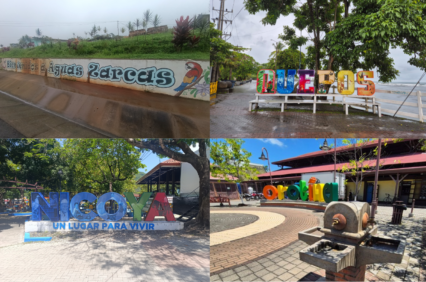
The Center-Periphery Divide: Performance Auditing and Systems Thinking in Costa Rica’s Intermediate Cities

In recent years, intermediate cities have emerged as critical drivers of regional development, yet evaluating their public services poses unique challenges for Supreme Audit Institutions (SAIs). To address this gap, Costa Rica’s SAI developed and implemented an innovative performance audit methodology specifically tailored to these distinct urban centers. This specialized framework advances traditional performance auditing by integrating a pragmatic assessment of public value, equity, and sustainable development within decentralized contexts.

Enhancing Public Value Through Thematic Auditing: Institutional Learning from BPK’s Experience

Supreme Audit Institutions (SAIs) play an essential role in strengthening accountability and transparency within democratic governance systems. As public policy challenges become increasingly complex and interconnected, SAIs are expected not only to provide assurance, but also to contribute more directly to governance improvement and sustainable development outcomes. This expectation is reflected in INTOSAI-P 12, which emphasizes that SAIs should create value and deliver tangible benefits to citizens through stronger accountability, transparency, and public sector performance (INTOSAI, 2013). International discussions have also highlighted the growing need for SAIs to address cross-sectoral and long-term governance challenges, including sustainable development and governance resilience (INTOSAI Journal, 2021).

U.S. GAO’s Fraud Estimates: Key Steps Ensure Decision-Makers Fully Accept and Understand Innovative Approaches

Over the past several years, the U.S. Government Accountability Office (GAO) estimated fraud facing the U.S. government using rigorous approaches that helped communicate the extent and impact of fraud in federal programs to Congress, the American public and antifraud professionals.

Beyond the Surface: Using Community Insights, Spatial Data, and Underwater Verification to Strengthen Environmental Audits

Environmental audits, especially in marine protected areas, face challenges in obtaining reliable evidence as environmental conditions often evolve gradually and are not completely reflected in routine monitoring records. Such challenges may necessitate an approach beyond conventional audit methods.

IJGA Q2 2026 Cover Image EN
Q2 2026
Financial Audits and Mechanisms for Good Governance of Public Funds

To finance government activities and provisions of public goods and services like healthcare, education, infrastructure, defense, and social welfare programs, public funds are used. These funds are usually managed by government entities and are subject to firm rules and oversight to ensure that they are used in most appropriate manner. Good governance, specifically with respect to public funds, discusses the principles and practices that ensure resources are managed appropriately, clearly, and in the best of public interest. Generally, good governance includes the following key principles: 

Financial Audits and Mechanisms for Good Governance of Public Funds: Promoting Accountability, Transparency, and Citizen Trust through Oversight and Best Practices

Good governance depends on the efficient and transparent management of public funds. Financial audits and oversight mechanisms have become increasingly important as public trust is closely tied to financial accountability. These audits and mechanisms have two main purposes: detecting and preventing corruption and mismanagement, as well as promoting transparency and strengthening institutions to deliver tangible benefits to citizens.

Implementation of Strategic Management Principles in the Public Sector: The Experience of The Chamber Of Accounts Of The Republic Of Azerbaijan

Over the past 20–25 years, strategic management has been widely accepted as one of the methods for modernizing public policy. The Strategic Plan of the Chamber of Accounts for 2021–2025, which outlines the Chamber’s long-term development, reflects its vision, mission, core values, outcomes and outputs, and relevant activities. It was developed based on international expert evaluations and recommendations, progressive practices, the “Strategic Management Handbook for Supreme Audit Institutions,” and the principles of INTOSAI P-12 (The Value and Benefits of SAIs – Making a Difference to the Lives of Citizens). The Strategic Plan serves as a roadmap for the Chamber of Accounts’ operations from 2021 to 2025. It aims to strengthen institutional capacity and enhance the role of high-quality auditing in public financial management and oversight, through greater engagement with the parliament, government, and society.

3D Isometric Flat Illustration of Link Building, Mobile Applications Marketing
Strategic-Based Audit Model: A Vessel in Navigating Dynamic Governmental Landscape

The Audit Board of the Republic of Indonesia (BPK) is constitutionally mandated as an independent body, reflecting the INTOSAI Lima Declaration (1977), which underscores the importance of legal, organizational, and operational independence in ensuring accountability. However, Indonesia’s evolving political and institutional landscape introduces challenges to this mandate. The 2024 presidential transition initiated a new development cycle under Law No. 25/2004, requiring each administration to prepare a National Medium-Term Development Plan (RPJMN) aligned with the Long-Term Development Plan (RPJPN). This process has involved ministerial restructuring, the establishment of new agencies, and the launch of flagship initiatives, such as the free nutritious meal program, all of which reshape governance arrangements and audit priorities.

Strengthening Good Governance Through Financial Audits: The Albanian Experience

Effective financial oversight is foundational to good governance. The Supreme State Audit Institution of Albania (KLSH) plays a vital role in safeguarding public resources, promoting accountability, and reinforcing trust in public institutions. This article shares key findings from the institution’s 2023 audit activities, assesses their impact on public sector governance, and identifies best practices applicable across INTOSAI member SAIs.