Author: International Journal of Government Auditing
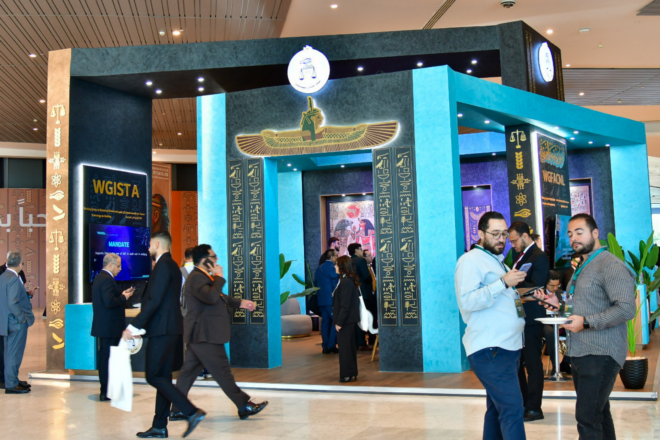
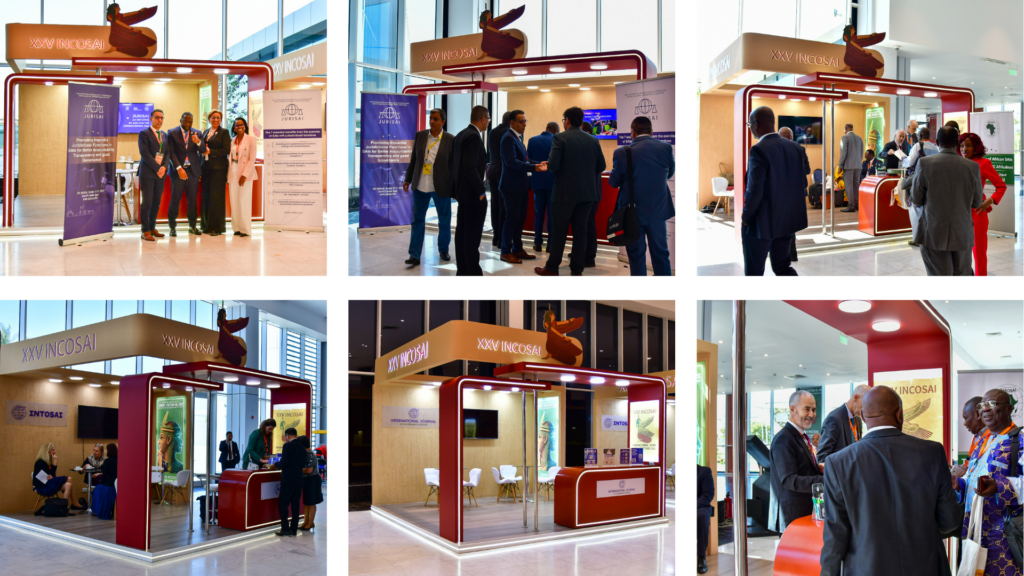
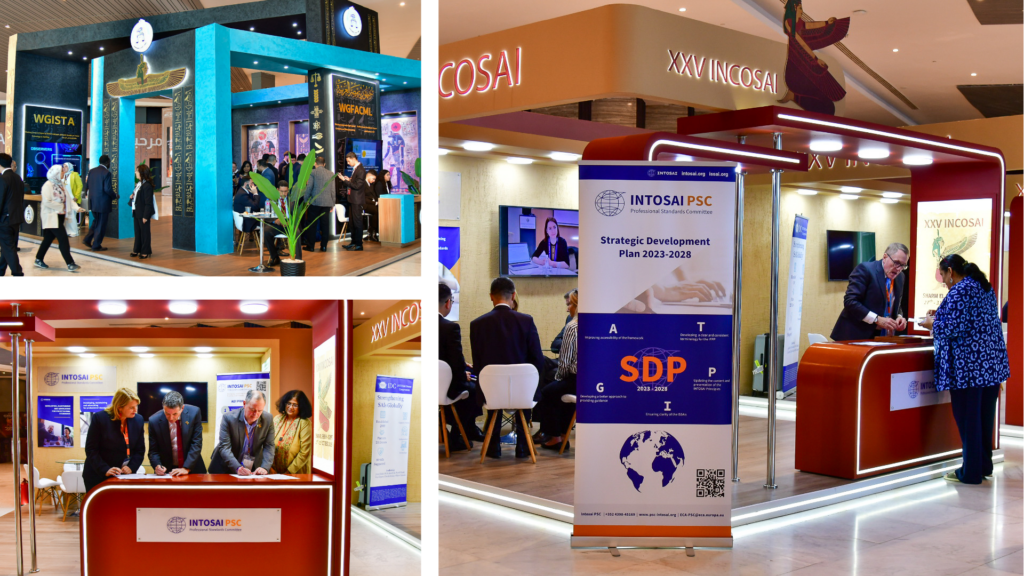
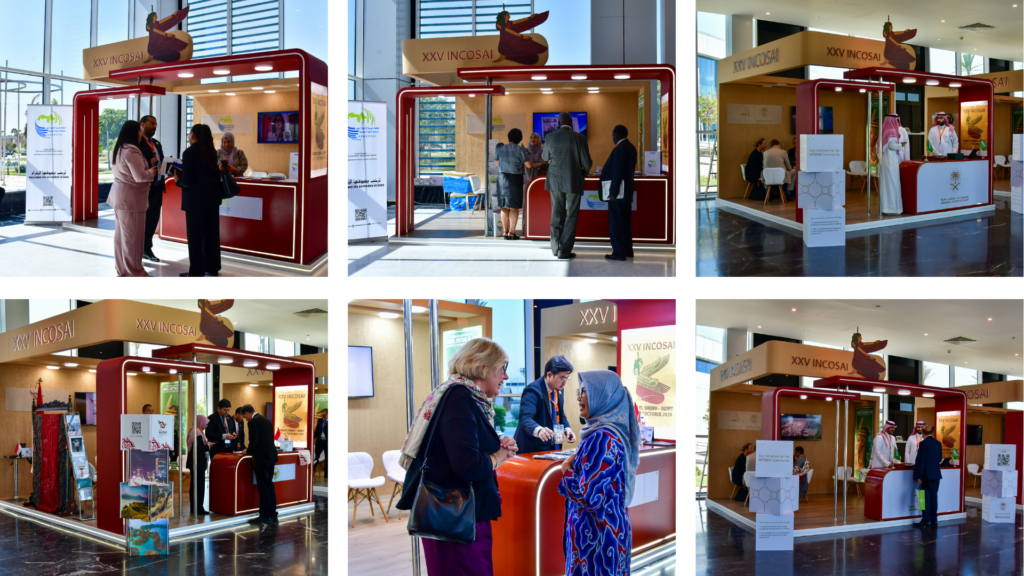
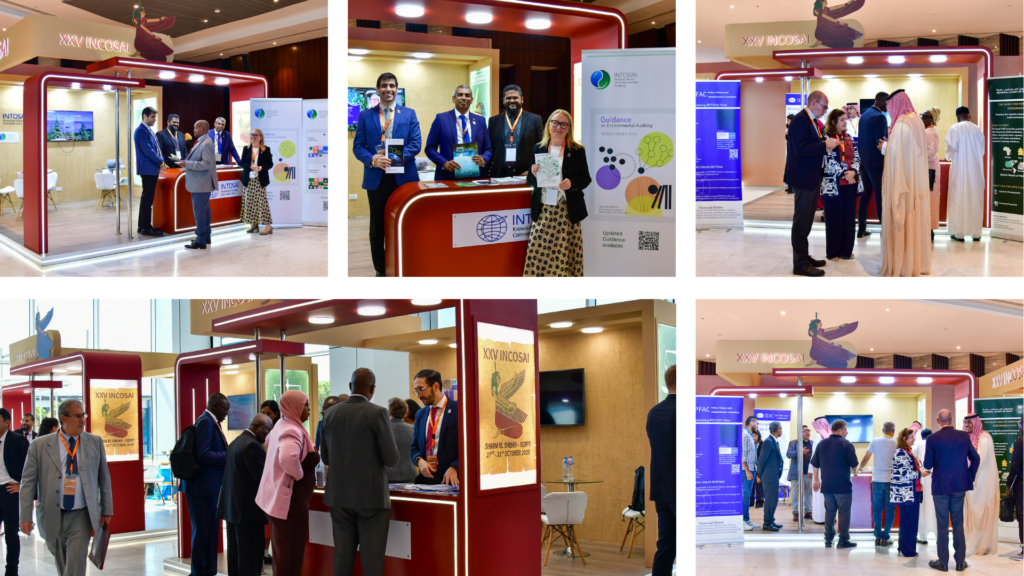
Numerous INTOSAI bodies, regional organizations and other affiliated groups were represented at booth spaces throughout the INCOSAI.
INCOSAI delegates utilized the booths as a meaningful opportunity to connect with one another.
Clockwise from top left: (1) JURISAI; (2) JURISAI; (3) AFROSAI; (4) AFROSAI; (5) INTOSAI Journal; (6) INTOSAI General Secretariat. Source: INTOSAI JournalClockwise from top left: (1) INTOSAI Chair, SAI Egypt and the INTOSAIWorking Group on Impact of Science and Technology on Auditing (WGISTA), and the INTOSAI Working Group on the Fight Against Corruption and Money Laundering (WGFACML); (2) INTOSAI Professional Standards Committee; (3) INTOSAI Professional Standards Committee (PSC) and IDI Memorandum of Understanding Signing at the PSC Booth. Source: INTOSAI JournalClockwise from top left: (1) ARABOSAI; (2) ARABOSAI; (3) The General Court of Audit of Saudi Arabia; (4) The General Court of Audit of Saudi Arabia; (4) The INTOSAI General Secretariat, Dr. Margit Kraker, meets with Dr. Isma Yatun, Audit Board of Indonesia Chairwoman and INTOSAI Vice Chair at the SAI Indonesia booth; (5) The Audit Board of Indonesia, INTOSAI Vice Chair. Source: INTOSAI JournalClockwise from top left: (1) Brazilian Federal Court of Accounts; (2) Brazilian Federal Court of Accounts; (3) INTOSAI Capacity Building Committee; (4) INTOSAI Capacity Building Committee; (5 CAROSAI. Source: INTOSAI JournalClockwise from top left: (1) INTOSAI Knowledge Sharing Committee and the INTOSAI Working Group on Environmental Auditing; (2) INTOSAI Knowledge Sharing Committee and the INTOSAI Working Group on Environmental Auditing; (3) INTOSAI Policy, Finance, and Administration Committee; (4) INTOSAI Policy, Finance, and Administration Committee; (5) INTOSAI Development Initiative. Source: INTOSAI Journal
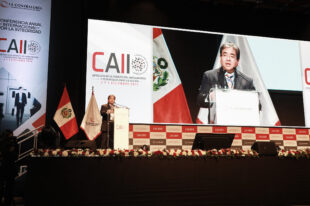
Technology has changed how we do business, how we conduct public administration and human relations, and how we analyze information. Technological advances have also impacted the auditor´s role with huge implications in government oversight. Using new tools, such as…
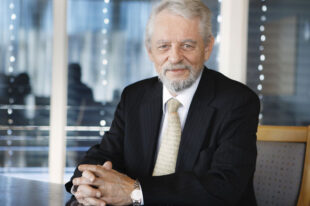
Mr. Jørgen Kosmo, former Auditor General (AG) of Norway, passed away July 24, 2017, at the age of 69. He was appointed by Parliament as the AG of Norway in 2006 and held the position until he retired in 2013. In this capacity, he also served as…