Tag: strategic review

Filter By:
Sort By:

Implementation of Strategic Management Principles in the Public Sector: The Experience of The Chamber Of Accounts Of The Republic Of Azerbaijan

Over the past 20–25 years, strategic management has been widely accepted as one of the methods for modernizing public policy. The Strategic Plan of the Chamber of Accounts for 2021–2025, which outlines the Chamber’s long-term development, reflects its vision, mission, core values, outcomes and outputs, and relevant activities. It was developed based on international expert evaluations and recommendations, progressive practices, the “Strategic Management Handbook for Supreme Audit Institutions,” and the principles of INTOSAI P-12 (The Value and Benefits of SAIs – Making a Difference to the Lives of Citizens). The Strategic Plan serves as a roadmap for the Chamber of Accounts’ operations from 2021 to 2025. It aims to strengthen institutional capacity and enhance the role of high-quality auditing in public financial management and oversight, through greater engagement with the parliament, government, and society.

3D Isometric Flat Illustration of Link Building, Mobile Applications Marketing
Strategic-Based Audit Model: A Vessel in Navigating Dynamic Governmental Landscape

The Audit Board of the Republic of Indonesia (BPK) is constitutionally mandated as an independent body, reflecting the INTOSAI Lima Declaration (1977), which underscores the importance of legal, organizational, and operational independence in ensuring accountability. However, Indonesia’s evolving political and institutional landscape introduces challenges to this mandate. The 2024 presidential transition initiated a new development cycle under Law No. 25/2004, requiring each administration to prepare a National Medium-Term Development Plan (RPJMN) aligned with the Long-Term Development Plan (RPJPN). This process has involved ministerial restructuring, the establishment of new agencies, and the launch of flagship initiatives, such as the free nutritious meal program, all of which reshape governance arrangements and audit priorities.

Applying Strategic Foresight in Performance Audit: Case Study of Audit of Energy Transition in Indonesia

Future uncertainty, driven by factors such as climate change, technological advancements, and global dynamics, poses challenges that require organizations and governments to adopt more flexible, adaptive, and resilient approaches to planning. SAIs play a crucial role in addressing climate change and future uncertainty by providing insights into the effectiveness of climate-related initiatives and fostering greater accountability and transparency. Strategic foresight in auditing is essential for anticipating and preparing for future uncertainties, enabling organizations to navigate risks and opportunities proactively. Applying a six-step foresight framework in auditing the energy transition, particularly in the electricity sector, allows auditors to evaluate progress, identify gaps, and provide recommendations for more sustainable and resilient energy policies. By integrating strategic foresight into auditing practices, organizations can better prepare for the complexities of a rapidly changing world and build resilience against future uncertainties.

The Role of Supreme Audit Institutions in a Changing World

As Auditor General, I have had the privilege of overseeing our national audit office during a period of change and significant challenges. As I reflect on my seven years in office, there are several key themes and lessons learned that I find to be essential for the ongoing development and effectiveness of Supreme Audit Institutions (SAIs) globally.

AFROSAI-E Engages Member Countries and Key Stakeholders at the 2022 Strategic Review & 18th Governing Board Meeting

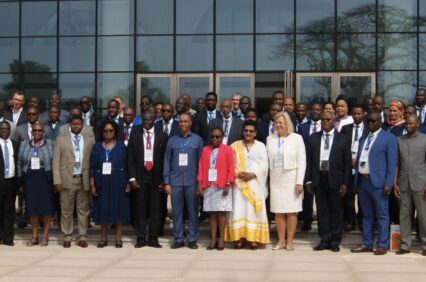
Over 110 delegates from AFROSAI-E’s 26 member countries, partner institutions, and key stakeholders attended its 2022 Strategic Review and 18th Governing Board meeting.