International Seminar on Desertification Prevention and Sustainable Development Audit Held in China
Desertification prevention and green development jointly serve the following objectives of the UN 2030 Agenda for Sustainable Development: Goal 15 “Life on Land,” which is committed to combating desertification, restoring degraded land, and halting biodiversity loss; Goal 13 “Climate Action,” which addresses climate change by enhancing ecosystem carbon sinks and climate resilience; Goal 8 “Decent Work and Economic Growth,” which drives employment and sustainable growth through green industries; and Goal 17 “Partnerships for the Goals,” which promotes global cooperation and resource sharing.
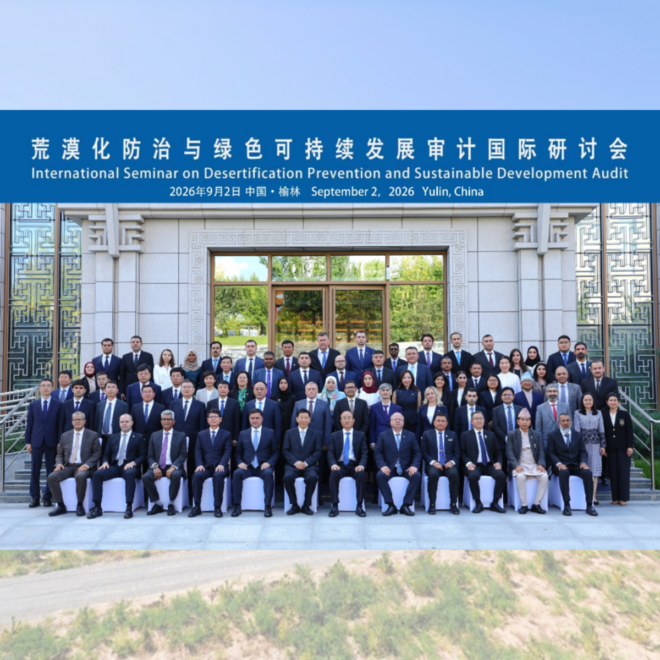
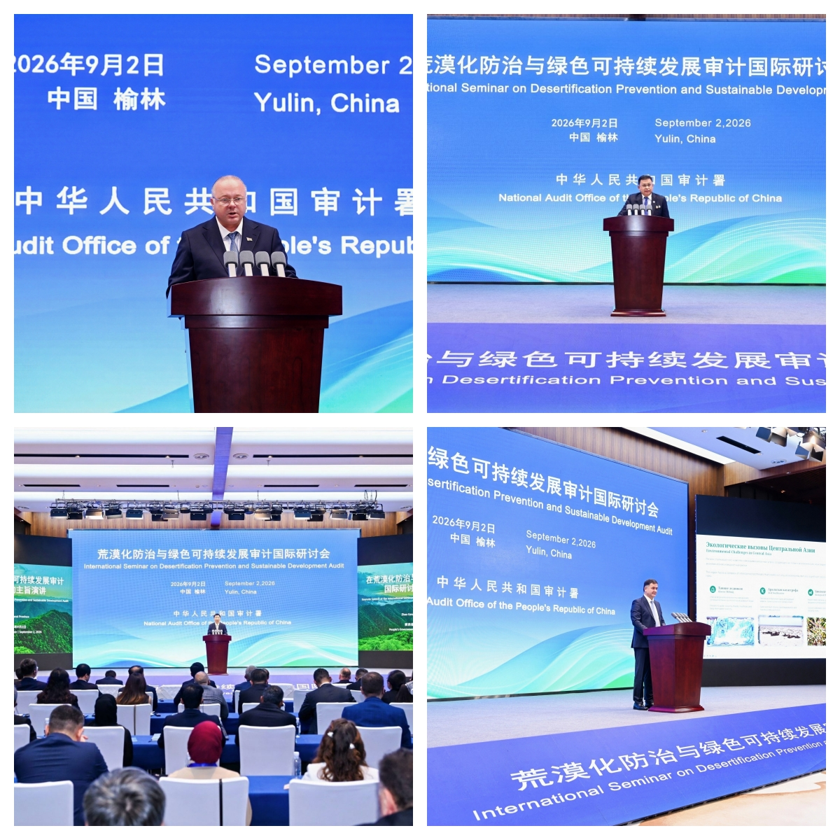
Desertification prevention audits is the main measure taken by supreme audit institutions (SAIs) to support environmental governance and accomplish relevant UN SDGs. On September 2, an International Seminar on Desertification Prevention and Sustainable Development Audit was held in Yulin, Shaanxi Province of China. More than 60 representatives from 24 SAIs attended the seminar.
The seminar featured keynote speeches by special guests and parallel discussion sessions. In keynote speech session, Hou Kai, Auditor General of the National Audit Office of China, pointed out that audit institutions should act together and promote international commitments through high-quality audits. Vasily Gerasimov, Chairman of the State Control Committee of Belarus, noted that strict law enforcement is the core support for achieving ecological protection goals. Jamshed Karimzoda, Chairman of the Accounts Chamber of the Tajikistan, stated that environmental issues such as land degradation urgently require strengthened cooperation. Monthien Charoenpol, Auditor General of Thailand and Chairman of the INTOSAI Working Group on Environmental Auditing, proposed enhancing environmental auditing capacity through the “4C strategic framework” (Continuity, Creativity, Commitment, and Connection). Other keynote speakers included Mr Zhao Gang, Governor of Shaanxi Province and Mr Feng Laifa, General Manager of China Energy Investment Corporation, who shared their views and practices of synergized efforts in combating desertification and how renewable energy projects in desert areas contributed to sustainable development.
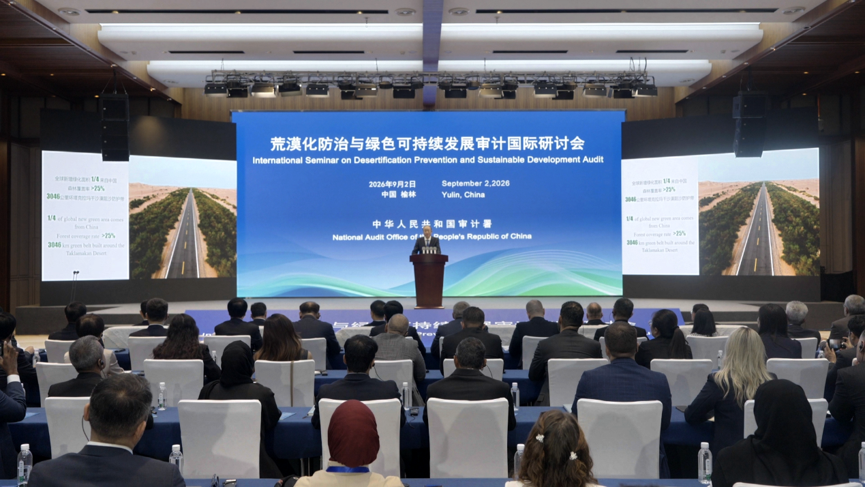
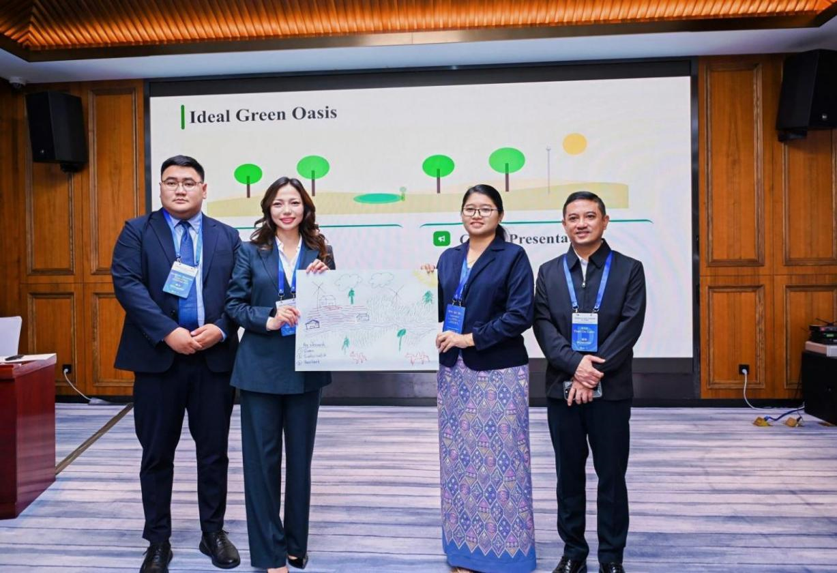
In the parallel discussions, representatives from Bahrain, China, Egypt, India, Iraq, Kuwait, Morocco, Oman, Pakistan, Palestine and other countries respectively introduced their working mechanisms and measures for implementing the UN SDGs, as well as challenges in conducting desertification prevention and sustainable development audits.
Participants agreed that an international initiative on combating-desertification has begun to take shape, and that SAIs can play an irreplaceable role in desertification prevention audits. Public sector audit serves as an effective mechanism for monitoring and promoting desertification control across four dimensions: information verification, oversight, performance evaluation and institutional improvement. Audit practice introduced modern technical tools—including 3S technologies (remote sensing, geographic information systems and global positioning systems), big data analysis and artificial intelligence—into the audit process has significantly enhanced audit effectiveness and objectivity.
The seminar advocated that sustainable development should become the core orientation of desertification prevention audits. While traditional auditing focuses on the compliance of fund use and project management, future-oriented auditing needs to balance the triple objectives of ecological improvement, economic development, and public well-being. The rise of green industries such as photovoltaic desert control, high economic value non-timber forests and desert tourism provides feasible pathways for aligning desertification control with regional sustainable development.
The seminar produced a draft research report on desertification control and sustainable development audit, which will be further refined and subsequently shared within the ASOSAI and INTOSAI working groups on environmental auditing. Participants also agreed that establishing a guideline on relevant audits is becoming necessary.
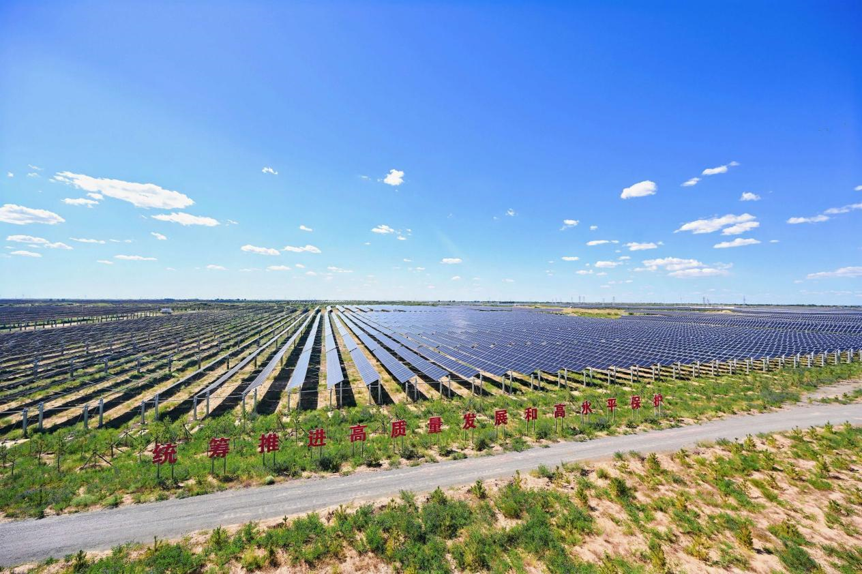
During the seminar, representatives also visited the Mu Us Sandland to gain firsthand understanding of photovoltaic sand control projects. They also visited a forest farm demonstration area for comprehensive management of arbor and shrub vegetation in sand land.