
By: Freddy Yves Ndjemba

Filter By:
Sort By:
IDI–OECD Global Project on SAI Independence side event
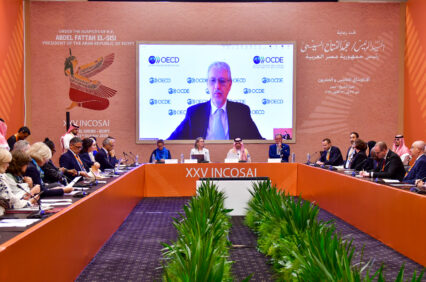
Side Event at XXV INCOSAI Highlights Early Results of the IDI–OECD Global Project on SAI Independence

During a side event at the XXV INCOSAI, the IDI–OECD Global Project on SAI Independence presented its initial results to the wider INTOSAI community. The session included contributions from János Bertók (OECD), Einar Gørrissen (IDI), H.E. Dr. Alangari (Chair of the INTOSAI PFAC), Dr. Caralee McLiesh (Auditor‑General of Australia), and Franziska Spörri (SECO, Switzerland). They discussed the early evidence gathered through the project and reflected on how Supreme Audit Institutions (SAIs) operate within their national accountability systems.
Developing Relevant and Innovative Approaches to Support SAI Independence: From the SAI Independence Rapid Advocacy Mechanism (SIRAM) to the SAI Independence Workstream

Supreme Audit Institutions (SAIs) have a vital role for public sector accountability, integrity, and transparency. To fulfill their role and build trust between the organs of the state and society, SAIs need to be independent. 

Developing relevant and innovative approaches to support SAI Independence: Insights from the SAI Independence Rapid Advocacy Mechanism (SIRAM)

Supreme Audit Institutions (SAIs) have a vital role for public sector accountability, integrity, and transparency. To fulfill their role and build trust between the organs of the state and society, SAIs need to be independent. 

SAI Independence may be understood as the ability of a Supreme Audit Institution to operate autonomously of the government, without undue influence and control. It is considered a fundamental condition for SAIs to effectively carry out their mandate. The INTOSAI Mexico Declaration on SAI Independence identifies eight conditions, known as the pillars of independence, as the benchmark against which the independence of an SAI can be assessed.