The Use of Drones in Financial Audits by Supreme Audit Institutions: A Case Study in São Paulo Municipality Court of Accounts

Author: Jorge de Carvalho
Introduction
In the ever-evolving landscape of financial auditing, the integration of technology has become not just advantageous but essential. This article explores how the use of drones in financial audits, particularly by the São Paulo Municipality Court of Accounts (TCMSP), can enhance accountability and improve the integrity of public resources. The focus will be on the assertion of integrity as cited in International Standards on Auditing (ISA) 315 (Identifying and Assessing the Risks of Material Misstatement), specifically regarding the accounting cycle of real estate assets. The case study illustrates a pragmatic approach to auditing that not only adheres to established norms but also introduces innovative methodologies to address significant issues in public financial management.
The Challenge of Real Estate Asset Recognition
The key issue at hand is that the City Hall of São Paulo substantially underreports real estate assets, which has been estimated at a minimum of R$ 10.5 billion. The lack of comprehensive recognition of these assets raises critical questions about the integrity of financial reporting and public accountability. According to International Public Sector Accounting Standards (IPSAS) 17, an asset must be recognized if it is probable that future economic benefits will flow to the entity and its cost or fair value can be measured reliably. However, in the financial audit for the year ended 2022, the TCMSP identified a significant risk of material misstatement due to the incomplete accounting of municipal real estate, which relates to the assertion of integrity.
The Role of Drones in Auditing
The conventional methods of auditing real estate assets often fall short in providing the necessary assurance regarding the completeness and accuracy of recorded assets. The integration of drone technology offers several advantages:
- Enhanced Visibility: Drones can capture high-resolution images and videos of properties, providing auditors with a comprehensive view of the assets that may not be readily accessible through traditional inspection methods.
- Efficiency: Drones can cover large areas in a fraction of the time it would take to conduct manual inspections, allowing auditors to gather more data in less time.
- Improved Evidence Collection: The visual evidence collected by drones can strengthen the findings of audits, providing clear documentation that supports the recognition of real estate assets.
- Cost-Effectiveness: While initial investments in drone technology may be significant, the long-term savings in labor costs and time can be substantial.
Case Study: TCMSP’s Implementation of Drone Technology
In 2022, the TCMSP conducted a financial audit in which the integrity assertion related to real estate assets was included in the scope, due to their significant value within the fixed assets transaction. The audit aimed to address the risk of significant underreporting of assets and to ensure compliance with the applicable auditing standards. The use of drone technology was a key tool in this assessment.
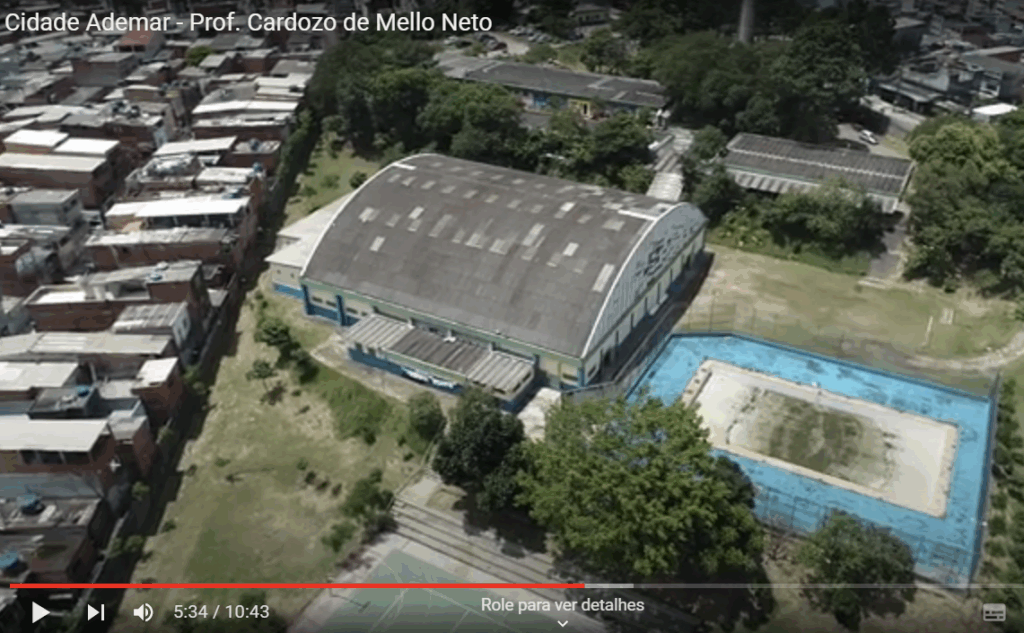
Screenshot from Drone Videos in the Fixed Assets Audit (eTCM 015710/2022): Apparently Abandoned Property: Rua Prof. Cardozo M. Neto, no number, Cidade Ademar
Audit Planning
Before the fieldwork commenced, the TCMSP developed a risk matrix that identified the risk of material misstatement due to the undervaluation of real estate assets. This risk assessment highlighted the necessity of achieving a 95% confidence level in the audit results, necessitating a specific sample-based approach due to operational limitations.
Sample Selection and Inspection
The team selected a sample of 20 properties from a population of 6,343 unaccounted assets (using tracing technique, by referring to the municipal real estate registry maintained for tax purposes, managed by the Department of Finance), focusing on those with significant value and relevance to municipal operations. Given the operational constraints, the TCMSP decided to leverage drone technology to inspect several selected locations.
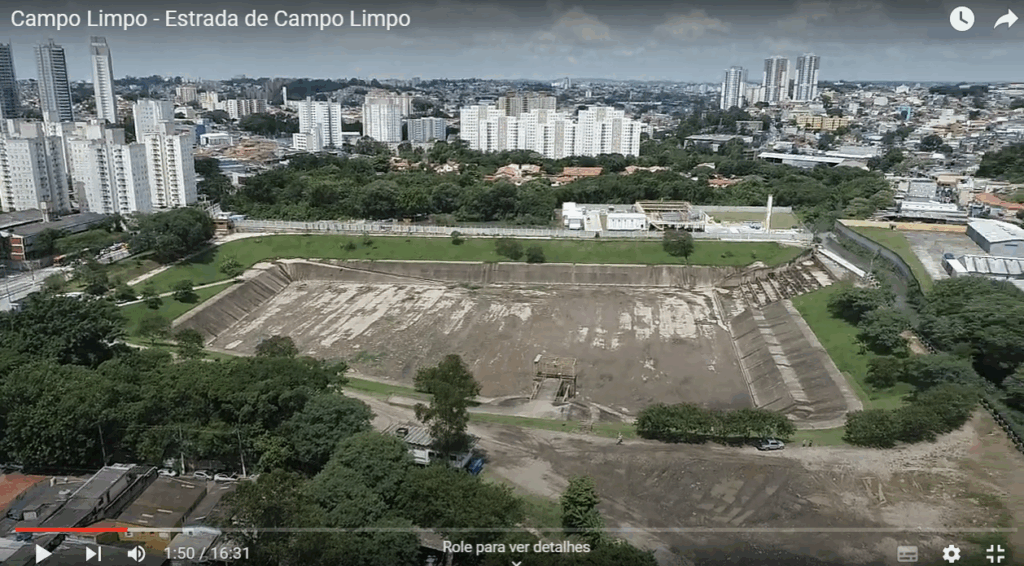
The inspections conducted between November 2022 and March 2023 revealed critical insights into the utilization and condition of these properties. For example, properties not recorded as Property, Plant and Equipment (PP&E), identified as parks, schools, and municipal buildings were confirmed through visual evidence captured by drones.
The visual confirmations served as the starting point for the audit team to proceed with the execution of additional audit procedures, such as document inspection, aimed at analysing the legal ownership of assets, thereby enhancing the robustness of the evidence related to the undervaluation of asset representation in the municipality’s accounting records.
Screenshot from Drone Videos in the Fixed Assets Audit (eTCM 015710/2022): Sharp Reservoir: Estrada do Campo Limpo, 6,197, Vila Pirajussara, Campo Limpo
Results of Drone Inspections
The drone inspections yielded significant findings:
- Confirmation of Assets: Several properties, previously unaccounted for in municipal records, were visually confirmed as active municipal assets. This included educational facilities and public parks, which were crucial for the municipality’s operations.
- Evidence of Condition: The aerial footage provided insights into the physical condition of the properties, allowing auditors to assess whether they met the criteria for recognition as assets, including considerations for impairment under IPSAS 21 (Impairment of Non-cash Generating Assets).
- Strengthened Reporting: The visual evidence collected supported the auditors’ assessments regarding the ownership and control of the assets, reinforcing the integrity of the financial statements.
Discussion: Implications for Accountability and Methodology
The integration of drones into the auditing process by the TCMSP not only demonstrates a successful application of technology but also sets a precedent for future audits. This methodology encourages a shift towards more innovative and effective practices in public financial management.
Enhancing Accountability
By utilizing drones, the TCMSP has taken proactive steps to enhance accountability in public resource management. The ability to verify the existence and condition of municipal assets directly contributes to the integrity of financial reporting. It also empowers the auditing body to make informed recommendations regarding asset management and recognition.
Methodological Advancements
The case study illustrates how drone technology can be systematically integrated into audit methodologies to improve the quality of evidence and the efficiency of the audit process. Future audits can benefit from:
- Standardized Procedures: Developing standardized protocols for drone inspections within the auditing framework can ensure consistency and reliability in findings.
- Training and Development: Investing in training for auditors to effectively utilize drone technology will enhance the overall capability of auditing teams.
- Collaboration with Technology Providers: Establishing partnerships with technology firms specializing in drone operations can provide auditors with the necessary support and expertise.
Conclusion
The use of drones in financial audits conducted by the São Paulo Municipality Court of Accounts represents a significant advancement in auditing practices. By proposing recommendations aimed at addressing the challenges of real estate asset recognition and the integrity assertion, the TCMSP has set a benchmark for accountability in public financial management. This case study not only highlights the benefits of technological integration but also serves as a model for other auditing institutions seeking to improve their methodologies and outcomes.
References
- International Federation of Accountants (IFAC). International Standards on Auditing (ISA) 315.
- International Public Sector Accounting Standards (IPSAS) 17.
- International Public Sector Accounting Standards (IPSAS) TSP 21.
- São Paulo Municipality Court of Accounts (TCMSP) Reports and Documentation.