Tag: EUROSAI

Filter By:
Sort By:
The French Cour des comptes’ Annual Public Report on Public Action to Adapt to Climate Change

The French Constitution entrusts the Cour des Comptes with the task of informing the public through its public reports. The Annual Public Report (APR) is an essential vehicle for this information. The law specifies that it concerns “a major public policy issue to which the Cour des Comptes wishes to draw the attention of the public authorities and contribute to informing citizens”. In its 2024 annual public report, the Cour des Comptes examined the theme of public action to adapt to climate change.

An “Ecological Transition Community” fuels the French Cour des Comptes with Tools

Considering the rise in environmental concerns and the growing importance of ecological transition issues in all national and local public policies, the French Cour des comptes, the supreme audit institution (SAI) that forms the financial jurisdictions with the regional and territorial audit chambers (CRTCs), has organized with the latter to strengthen the relevance of their audit and assessment work in these areas, which already account for a growing share of their scheduled work. 

EUROSAI Working Group on Environmental Auditing Engages Auditors in Key Activities Throughout 2024

EUROSAI Working Group on Environmental Auditing (EWGEA) celebrated its 25th anniversary during its Spring Session on 15-17 May 2024, hosted by the National Audit Office of Malta. The EWGEA Chair received many words of appreciation on this occasion from both previous EWGEA Chairs:, the Auditor General of Norway and Auditor General of Estonia.

The Role of Supreme Audit Institutions in a Changing World

As Auditor General, I have had the privilege of overseeing our national audit office during a period of change and significant challenges. As I reflect on my seven years in office, there are several key themes and lessons learned that I find to be essential for the ongoing development and effectiveness of Supreme Audit Institutions (SAIs) globally.

Inside INTOSAI
Inside INTOSAI
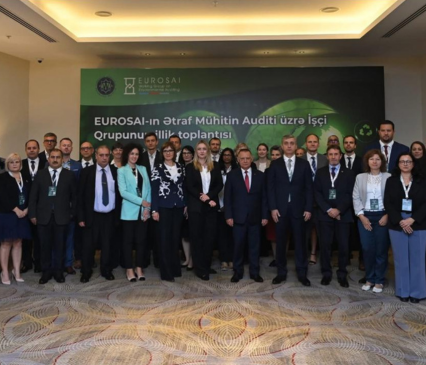
EUROSAI Working Group on Environmental Audit Annual Meeting 2024 
December 18, 2024
Experiences on Auditing Algorithms and Artificial Intelligence in the Dutch Government

The application of algorithms and artificial intelligence (AI) technology in government provides many opportunities for improving governmental processes, public service delivery, citizen engagement, and helping solve social challenges. As a result, this kind of technology is increasingly becoming a more important part of how governments operate. However, the introduction of AI also introduces risks if not deployed responsibly. For instance, AI might contain biases that lead to discriminatory outcomes or personal data may not be adequately protected. A lack of transparency when using the technology might lead to governance challenges. 

State Audit Office of Georgia’s real time experience in recommendation follow-up with innovative ARIS platform

The State Audit Office of Georgia (SAO) has emerged as an inspiration for innovation and accountability for advancing effective public financial management. To fulfill its mandate of identifying and addressing systemic deficiencies in public administration, the SAO has embraced innovative technology, launching a transformative initiative of Audit Recommendation Implementation System (ARIS). This article explores the impact of the ARIS, the groundbreaking platform that has significantly changed the follow-up process of audit recommendations in Georgia.

Think BIG! — Testing a New Approach for Recommendations

The State Audit Office Law stipulates that the State Audit Office of Latvia (SAI Latvia) has the right to provide recommendations for addressing the deficiencies discovered during the audit, as well as to specify a time limit by which the audited entity shall notify, in writing, that the deficiencies have been resolved. In 2023, SAI Latvia celebrated its centenary, and over time, the State Audit Office has refined its approach in providing recommendations and in facilitating their implementation by the auditees.

Implementing Recommendations and Identifying Impact of the Audits: Perspectives from the National Audit Office of Malta

The National Audit Office’s (NAO Malta) mission is to assist in promoting accountability, propriety, and best practices in government operations. This mission is continuously achieved through the substantial number of audits of a compliance, financial, performance or investigative nature in various Ministries, departments and Government entities. 

News in Brief
News in Brief
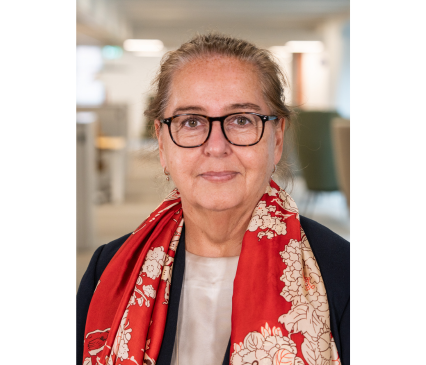
Christina Gellerbrant Hagberg appointed as Auditor General of Sweden
October 8, 2024
Inside INTOSAI
Inside INTOSAI
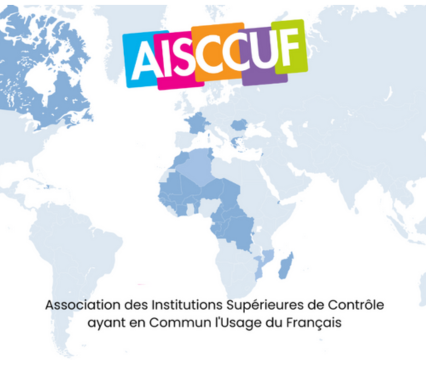
Save the Date: French-speaking event on the Sustainable Development Goals (SDGs) in Yaoundé, Cameroon from July 2 to 4, 2024
June 26, 2024
The specificities of the jurisdictional activities of the Italian Corte dei conti

The model of jurisdictional supreme audit institution (SAI) is recognized as that of an institution which is able to carry out all types of audit – performance, compliance, and financial audits – and, in addition, is invested with the power to issue formal rulings directly sanctioning the liability of managers of public funds when its audit findings show some irregularities, or when such irregularities are referred to the SAI by a third party.

The Corte dei conti fights against fraud in European Union funds and the National Recovery and Resilience Plan through jurisdictional activities 

The European Union needs a strong protection of its funds in order to ensure its administration, and to allocate resources to the Member States or other beneficiaries, for the implementation of its own policies. Both tax evasion and illicit conduct resulting in the receipt of undue funding or the diversion of such funds from their intended purposes cause damage to the European Union (EU)’s treasury.

The Challenges of the Jurisdictional Function of the Supreme Audit Institution of Spain in Modern Society 

Spanish society has undergone major changes over the last 20 years in line with other countries of the European Union. The financial crisis of 2008 strongly impacted the Spanish citizenry, and resulted in the arrival of important and fast changes: political, economic and social changes.

The relationship between audit and the enforcement of financial responsibilities: Experiences from SAI of Portugal

The SAI of Portugal (Tribunal de Contas) is currently an institution that combines both the Anglo-Saxon and the Jurisdictional models of Supreme Audit Institutions. It means that although the audit function is a main function activity of the Court, it also complimentarily has also the power to judge financial liabilities.

Public Prosecution Offices within Supreme Audit Institutions’ jurisdiction, their role and importance for the due process of law: A glance at the findings of a global survey

The INTOSAI-P 50 document outlines twelve principles for the jurisdictional activities of Supreme Audit Institutions (SAIs) empowered with the corresponding mandate, which allows them to rule on the liability of individuals accountable by law in case of irregularities or mismanagement.

The new system of financial accountability for public managers, at the heart of the public integrity ecosystem

The French Cour des comptes and regional and territorial chambers (CRTCs) underwent a major overhaul with the reform of the financial liability regime for public managers on 1st January 2023. Until this date, the contentious functions of these financial jurisdictions were based on two distinct liability regimes: the one specifically applicable to public accountants (who handle the public fund and keep the accounts) and the one generally applicable to “authorizing” public managers (who decide on revenue and expenditure).

SAI Latvia and the Practice of Recovery of Losses

The State Audit Office of the Republic of Latvia (SAI Latvia) is an independent and collegial supreme audit institution (SAI) with its mandate specified in the Constitution of the Republic of Latvia. Specifically, SAI Latvia has the mandate to notify public entities of the findings on public finance management which pertain to them, and to notify law enforcement authorities of violations of legal provisions detected during an audit. However, SAI Latvia does not have the right to make decisions on punishing officials who commit unlawful actions.

The seven essential benefits from the exercise of SAIs with jurisdictional functions

SAIs with jurisdictional powers are often misunderstood, and the value of their specific features is generally not fully appreciated. A SAI has jurisdictional powers when it has received the legal mandate to sanction a person on the grounds of an irregularity or damage, related to the use of public funds under the SAI’s jurisdiction and which can be imputed to that person, following contradictory-adversal proceedings.

Guidelines for the 12 Principles Set Out in INTOSAI-P 50

At its General Assembly in Lisbon, Portugal in September 2021, the Forum of Jurisdictional SAIs adopted a set of guidelines designed to publicize and promote the exercise of jurisdictional and contentious missions by SAIs vested with this competence. These guidelines provide and illustrate in very concrete terms the frame of reference for this exercise in conditions of independence, objectivity or neutrality, legal rigor, public interest and fairness in line with the highest international standards.

Overview of the INTOSAI-P 50

The INTOSAI Core Principles are at the pinnacle of INTOSAI’s professional pronouncements, just behind the Lima and Mexico Declarations, which represent the “Magna Carta” of external government auditing and define the conditions for its independent and effective functioning. To date in 2024, there are three: one is devoted to the value and benefits that SAIs bring to citizens (INTOSAI-P 12), another to transparency and accountability (INTOSAI-P 20), and the third sets out the 12 principles that should guide the actions of SAIs with jurisdictional powers, in the exercise of their functions.

Overview of the different models of SAIs and focus on the jurisdictional model

There are three main models of SAIs in the world, and several variants. They have a very long history, dating back in some cases to the Middle Ages, but all three were renewed and developed between the 18th century and the beginning of the following century, when modern states were established.