Tag: independence

Filter By:
Sort By:
Regulating the Regulation: How the TCU Exercised Its Independence to Address Artificial Intelligence Challenges in the Brazilian Public Sector

The rapid expansion of artificial intelligence (AI) in the public sector has placed Supreme Audit Institutions (SAIs) at a new frontier of oversight. Amid promises of increased efficiency and significant risks to ethics, transparency, and accountability, the role of SAIs demands technical discernment and institutional autonomy.

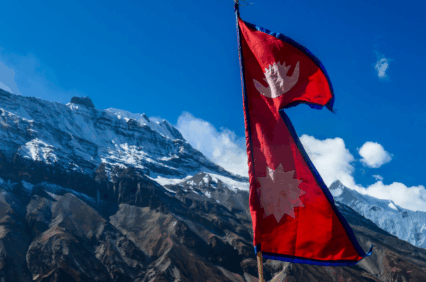
SAI Independence of Nepal: Triumphs and Challenges

The term “Supreme Audit Institution (SAI) independence” is defined as the ability to accomplish tasks objectively and effectively and to be protected against outside influence. Such independence, or a necessary degree of independence, shall be laid down in the Constitution, details may be set out in legislation, and an independence audit mandate shall be guaranteed (Lima Declaration 1977). Organizational independence refers to financial, managerial, and administrative autonomy (The Mexico Declaration, 2007). It is achieved through the application of key principles, various means, and safeguards that promote accountability and ensure transparency.

A Century of Change: The Albanian SAI’s Journey to Independence and Modernization

As the independence of SAIs is the cornerstone of their ability to safeguard public resources, promote transparency, and strengthen trust in government, it is widely accepted in the international audit sphere that without institutional, financial and operational autonomy, audit findings and recommendations risk being influenced, underestimated, or ignored, undermining accountability. As such, through frameworks as the Lima and Mexico Declarations, it has been consistently affirmed that independent SAIs are essential pillars of democratic governance. Yet, independence is not a fixed state as it requires protection and adaption to dynamic realities.

A Journey of Institutional Development Towards the Creation of a Truly Specialized and Independent SAI: How Mozambique’s SAI Became a Benchmark in Specialized Audits and its Prospects

Mozambique’s supreme audit institution (SAI) continues to operate under a hybrid model inherited from the colonial epoch, resembling the jurisdictional model. Mozambique’s Administrative Court (Tribunal Administrativo, TA) consolidates three distinct courts within a single organization, represented by its respective chambers. The First and Second Chambers are focused on Administrative, and Tax and Customs litigation, respectively. The Third Chamber performs the functions of an SAI. Despite a visible and steady process of institutional development in recent years, the main obstacle to its progress has been its hybrid structure. This configuration hinders the institution’s organizational, financial, and functional independence, the foundational basis for the effective functioning of an SAI as recognized in the 1977 Lima Declaration. Consequently, there is no fully functional SAI in Mozambique that meets the recommendations of the United Nations (UN), INTOSAI, and international best practices.

Auditing Sensitive Government Bodies: Finding the Right Balance Between Transparency and Security

The independence of Supreme Audit Institutions (SAIs) is an essential element to ensure the effectiveness of auditing. It ensures that audit results are objective, credible, and free from external influence. Independence reinforces public confidence in the audit process and strengthens accountability mechanisms in government. Although, when auditing sensitive government entities, such as national security agencies, SAI independence can encounter significant challenges.

Strengthening BPK’s Independence: Leveraging Strategic Planning, Digital Innovation, and Institutional Integrity

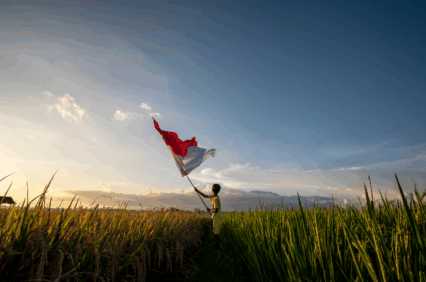
Independence is not merely a theoretical principle in the governance of state financial audit institutions, but rather an absolute requirement for the realization of credible public accountability. Independence is the primary foundation of INTOSAI-P10. INTOSAI-P10 emphasizes that the Indonesian Audit Board can only be objective and effective if it is independent from the audited entity and protected from external influences. Public trust is the greatest asset for any state institution. This trust is born from one fundamental key: independence, namely the freedom to work objectively, honestly, and free from pressure from any party. The independence of the BPK is the primary foundation for audit results to be recognized, trusted, and have a real impact on improving state financial governance. 

25 Years in French Polynesia: A Recognized Presence and Independence

Created in 1990, the Territorial Chamber of Accounts of French Polynesia has been based in Papeete (Tahiti) since 2000. Since then, as a supreme audit institution (SAI), it has carried out its judicial and audit functions. With a total staff of 13, including six magistrates, it contributes to informing citizens and improving local public management.

Leveraging a Coalition to Bring Change and Engaging Parliament for SAI Belize’s Need for Greater Independence 

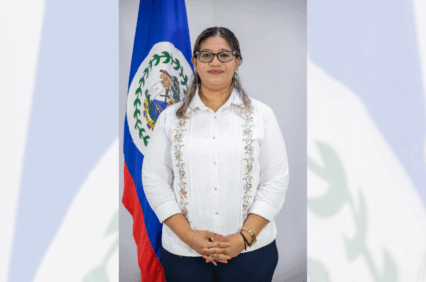
SAI Belize is not a fully independent institution. While its legal mandate allows for audits to be carried out as deemed necessary, the Office is dependent on respective line ministries for the hiring of staff and approval of budget. In March 2025, I was appointed  as the new Auditor General, and have dedicated the first six months of my term to carry out awareness sessions with different stakeholders to introduce the conversation of why SAI Belize should enhance its independence. 

The Independence of the Supreme Audit Institution: Challenges and Opportunities

The issue of the independence of Supreme Audit Institutions (SAIs) is back in the spotlight, more than ever before, in the context of complex and intertwined geopolitical, economic and environmental changes and crises. At a time when there is an urgent need for independent and effective oversight institutions, particularly given the steady increase in public spending and the growth of public debt, coupled with limited revenue growth, these institutions are facing pressures that undermine their independence and negatively affect their ability to perform their mandated roles. These pressures have taken various forms, such as budget cuts or failure to provide sufficient resources to carry out their work, interference in their programs and results, and in some cases the dismissal of officials or delays in their appointment

Strengthening Independence through Operational Procedures: The Experience of the Tribunal de Contas do Estado de Goiás

The independence of Supreme Audit Institutions (SAIs) is widely recognized as a cornerstone of effective public oversight. The Lima Declaration¹ (INTOSAI P-1) emphasized that SAIs “can only accomplish their tasks objectively and effectively if they are independent of the audited entity and protected against outside influence.” Building on this principle, the Tribunal de Contas do Estado de Goiás (TCE-GO), Brazil’s state-level Court of Accounts, has invested in transforming the fundamental principles of ISSAIs into concrete operational routines. This effort has aimed not only at raising methodological quality but also at safeguarding independence in practice, ensuring that oversight activities remain resistant to political, economic, and institutional pressures.

Independence through Governance

Since its adoption in 2007, the Mexico Declaration on SAI Independence has been a landmark in strengthening the independence of Supreme Audit Institutions (SAIs) worldwide. By codifying eight principles, it established a global consensus: independence is essential for credible public audit.

Strengthening SAI Independence: Global Progress and the Saudi Experience

Supreme Audit Institutions (SAIs) are pivotal in safeguarding public resources, ensuring that governments are held accountable and fostering transparency in the management of public funds. A key to fulfilling this role is their independence from undue external influence, which allows them to perform audits with objectivity and credibility. As emphasized by INTOSAI’s guidance, SAIs operate most effectively when shielded from interference, allowing them to properly strategize, acquire necessary information, and report findings without restrictions (INTOSAI, 2019). Political influence, budgetary constraints, and limited access to records can undermine audit quality and public trust. This article examines how the General Court of Audit (GCA) of Saudi Arabia has successfully navigated challenges to its independence through robust legal frameworks and disciplined execution, offering practical insights that other SAIs can adopt to reinforce independence and thereby enhance governance and public confidence.

Independence in Auditing

In my role as the Auditor General for Western Australia, independence is not just a concept but a practice that underpins every audit we conduct. This independence ensures that our audits are conducted without influence or interference, thereby maintaining the trust and confidence of the Parliament and the community.

SAI Indonesia’s Pathway to Safeguarding Independence

The independence of Supreme Audit Institutions (SAIs) has long been recognized as a fundamental principle for ensuring the credibility and effectiveness of public sector auditing. Since the adoption of the Lima Declaration in 1977, the global consensus has been clear mentioning SAIs cannot fulfill their oversight mandate effectively without a high degree of independence, both formally guaranteed and practically exercised. Independence serves not only a technical function but also carries normative significance, as it underpins the accountability of governments to citizens and contributes to the broader goal of strengthening institutions as articulated in the United Nations Sustainable Development Goals, particularly Goal 16 on peace, justice, and strong institutions.

Strengthening Independence: Fiji’s Journey to a Modern Audit Act

The independence of Supreme Audit Institutions (SAIs) is fundamental to ensuring accountability, transparency, and good governance in the public sector. For SAI Fiji, this principle has been at the heart of a long and determined journey to modernize the legislative framework guiding its work. The enactment of the Audit Act 2025 marks a historic milestone, one that reflects perseverance, collaboration, and commitment to safeguarding the independence of Fiji’s Office of the Auditor General.  The Audit Act 2025 came into force in May 2025.

Upholding Independence: Triumphs and Challenges of the Royal Audit Authority of Bhutan

Supreme Audit Institutions (SAIs) are crucial for good governance, accountability, and transparency. In Bhutan, the Royal Audit Authority (RAA) audits public resources, with its effectiveness critically dependent on independence amidst political, economic, or institutional pressures. This article examines SAI Bhutan’s real-world experiences, highlighting its successes in safeguarding independence and the persistent challenges it faces, drawing insights from official publications, peer reviews, and specific audit cases.

The Establishment of the National Audit Office of Malta: Safeguarding of SAI Independence Enshrined in the Constitution

The 1997 constitutional and legal enactments stand as a defining event in the history of the Maltese National Audit Office, which originated as an auditing department within the public service. This historical date is comparable to the founding of the former Department of Audit, established by the first British Governor of Malta, Sir Thomas Maitland, back in 1814, and the grant of elementary constitutional protections to the Director of Audit when Malta became an independent state in 1964.  To commemorate this important milestone in 2022, amongst other initiatives, the National Audit Office of Malta (NAO) issued a scholarly book entitled ‘State Audit in Times of Transition – Reflections on Change and Continuity, Challenge and Opportunity from Malta and Beyond’. Edited by Professor Edward Warrington, it includes a collection of studies that essentially reflect on the past and present with an eye to our institution’s future.  This article is based on the introduction to this book that is accessible on our website (State-Audit-in-Times-of-Transition).

Scanning Supreme Audit Institutions Independence:  A Spotlight on Indirect Interference

The principle of independence is the cornerstone of credible public sector auditing. Foundational documents, as the Lima Declaration (INTOSAI 1977) the Mexico Declaration (INTOSAI 2007), and landmark United Nations General Assembly resolutions, including A/RES/66/209 (2011), A/RES/69/228 (2014), and the political declaration from the special session against corruption, A/S-32/L.1 (2021), support a global consensus that strong, independent SAIs are essential pillars of democratic accountability and public trust.

Three Misconceptions on the Independence of Supreme Audit Institutions

Independence is what Supreme Audit Institutions need to fulfill their vital role of promoting transparency and accountability in public administration. Yet it is often jeopardized by political interference. What are the most effective strategies for safeguarding it? Research suggests that we may have some misconceptions about the effectiveness of existing measures in this crucial area.

SAI Cyprus Organises High Level Event on EU SAIs Independence

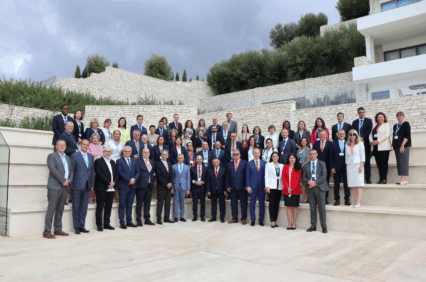
The Supreme Audit Institution (SAI) of Cyprus hosted a High Level event on European Union (EU) SAIs Independence in Pafos on October 15th 2024, with keynote speakers from the European Commission, the INTOSAI Development Initiative (IDI), the Support for Improvement in Governance and Management (SIGMA)/ Organisation for Economic Co-operation and Development (OECD) and the House of Representatives of the Republic of Cyprus.  The event was attended by 21 SAIs of the European Union and 5 SAIs of Candidate and potential Candidate countries.   The purpose of the event was for SAIs to reaffirm their commitment to safeguard their independence, address challenges that could pose a threat to it and discuss possible solutions.  

Perspectives from the World Bank on SAI Independence through the Independence Index 

Supreme Audit Institutions (SAIs) are a cornerstone for public financial management and good governance. Being able to work independently is necessary for transparency, accountability, and the good use of public resources. The World Bank considers that SAI independence is not only a legal or technical aspiration but also a developmental necessity. SAIs’ mandate is to build trust in the public, hold governments accountable, and contribute to national development goals, particularly Sustainable Development Goal (SDG) 16 on peace, justice, and strong institutions (United Nations, 2015). But they cannot do these things if they are not fully independent. 

Advancing SAI Independence Through the AFROSAI-E Model Public Audit Act

Across Africa, the independence of Supreme Audit Institutions (SAIs) faces growing pressure. Political transitions, fiscal crises, and governance challenges have, in some cases, led to attempts to limit the authority of SAIs, restrict access to resources, or interfere with the tenure of Auditors General. Such threats undermine not only the credibility of SAIs but also their ability to deliver impartial audits that safeguard public funds and strengthen trust in government. In this context, legislative, administrative, and financial independence is not a theoretical aspiration; it is a practical necessity for SAIs to fulfil their constitutional mandates without fear or favor.