The Cooperative Audit on Climate Change Adaptation Actions launched at the INCOSAI XXV
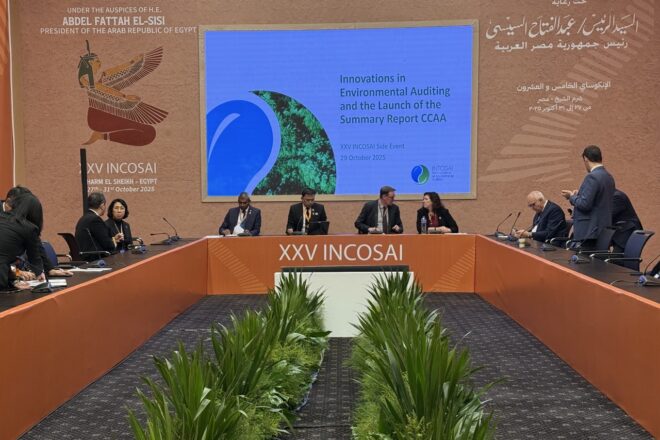
Authors: Vivi Niemenmaa & Mohamed Ibrahim Jaleel, moderators of the side event
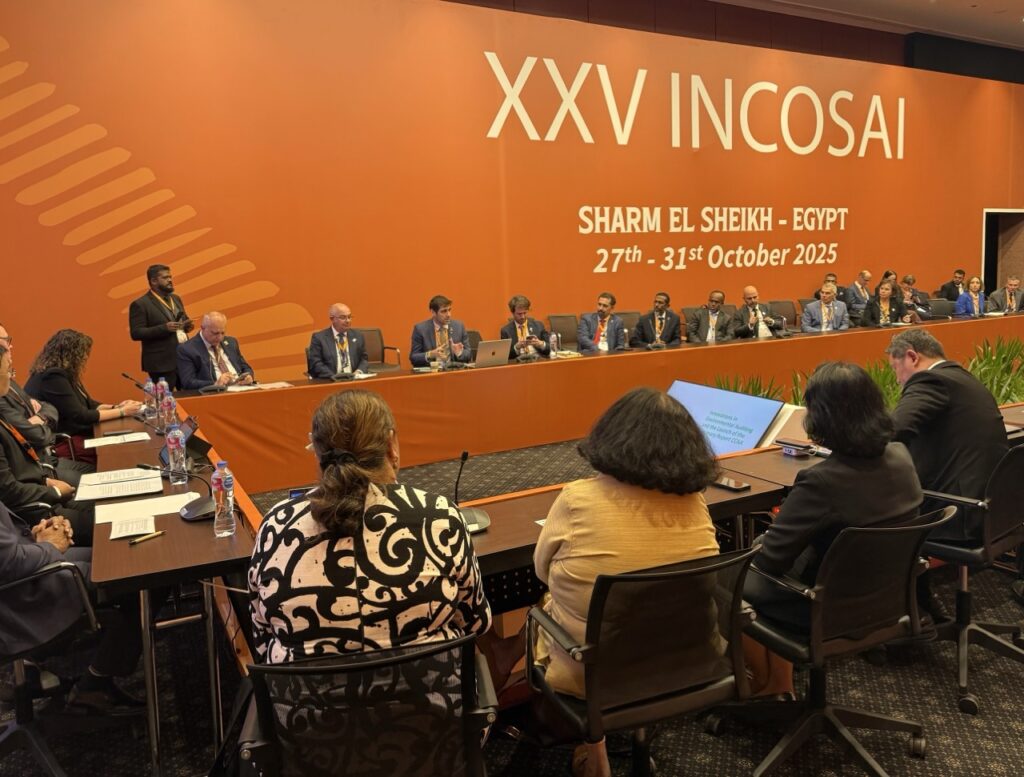
The INTOSAI Working Group on Environmental Auditing (WGEA) side event, “Innovations in Environmental Auditing”, at the INCOSAI spotlighted the latest innovations within the INTOSAI WGEA community. First, highlighting some of the recent innovations, Vivi Niemenmaa from the WGEA Secretariat introduced the new agile support system, Audit Clinic, that has been piloted in 2025 with outstanding feedback. This is a mechanism where SAIs can book a one-hour consultation slot with a more experienced SAI to discuss any environmental audit related issue. As another innovation, Dashiell Da Costa from SAI Brazil, revealed the first results of the second assessment round of the ClimateScanner, covering assessments from 100 SAIs. The official launch was foreseen in the COP30 Climate Conference.
The centrepiece of the event was the launch of the summary report from the global cooperative audit on Climate Change Adaptation Actions (CCAA). This is a landmark cooperation led by the IDI and the WGEA, involving 54 SAIs across all regions. Summary publication Global Climate Adaptation Audits for a Resilient Future consolidates lessons learned and actionable recommendations from audits carried out by the participating SAIs. The audits have revealed significant gaps, but also promising opportunities, in how governments worldwide are adapting to escalating climate impacts.
High Level Panel Discussed the Adaptation Audits
A high-level panel brought together Auditors General to reflect on what the recent climate change adaptation audits are revealing across different regions, and what those lessons mean for strengthening public governance in the face of escalating climate risks. Building on the launch of the cooperative audit’s summary publication, the discussion emphasized both common systemic gaps and practical opportunities for improvement, particularly in countries where climate impacts are already shaping day-to-day development choices.
Auditor General Karen Hogan of Canada highlighted the track record of SAI Canada in climate-related audits, including a recent audit on adaptation. She also reflected on the many benefits from the perspective of a mentoring SAI, as the CCAA project relied on dedicated mentor support from SAIs of Canada, Maldives, New Zealand, PASAI Secretariat, and USA.
Speaking from the perspective of small island developing states, Auditors General Hussain Niyazy of the Maldives and Finau Nagera of Fiji drew attention to the distinctive challenges SIDS face, where climate impacts are immediate and the margin for policy failure is narrow. Mr. Niyazy highlighted that audit findings from SIDS show that, despite existing climate policies, implementation is hindered by weak governance, limited capacity, poor coordination, and barriers to accessing climate finance. He stressed that building resilience requires stronger institutions, better oversight, accessible climate finance, data-driven action, and closer peer collaboration among small island developing states (SIDS) SAIs.
Online Training and Mentoring Delivered Strong Results
Reflecting on the cooperative audit model itself, Auditor General Charles Deguara of Malta praised the quality of support provided to participating auditors, highlighting both the online training and the mentoring offered throughout the audit process. Deputy Director General Archana Shirsat echoed the potential of these online support approaches to play an even greater role in future capacity-building initiatives.
The event was opened by outgoing Chair of the WGEA, Auditor General Sami Yläoutinen from SAI Finland, and closed by the new Chair, Auditor General Monthien Charoenpol from SAI Thailand, paving way for the future action supporting SAIs with their climate audits.