Strengthening Independence through Operational Procedures: The Experience of the Tribunal de Contas do Estado de Goiás
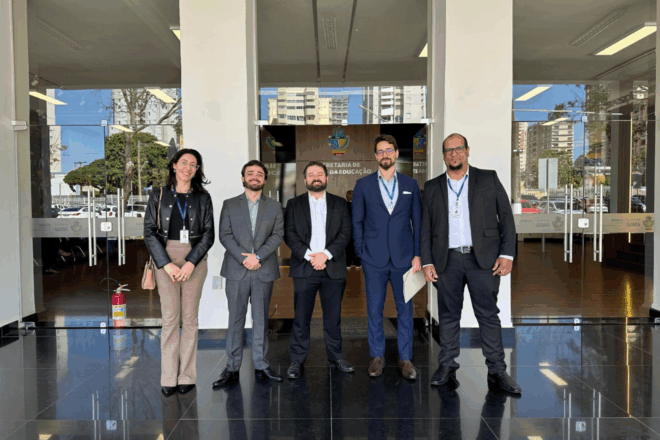
By Gustavo Felipe Mendes Corrêa and Andre de Oliveira Navarro
The independence of Supreme Audit Institutions (SAIs) is widely recognized as a cornerstone of effective public oversight. The Lima Declaration¹ (INTOSAI P-1) emphasized that SAIs “can only accomplish their tasks objectively and effectively if they are independent of the audited entity and protected against outside influence.” Building on this principle, the Tribunal de Contas do Estado de Goiás (TCE-GO), Brazil’s state-level Court of Accounts, has invested in transforming the fundamental principles of ISSAIs into concrete operational routines. This effort has aimed not only at raising methodological quality but also at safeguarding independence in practice, ensuring that oversight activities remain resistant to political, economic, and institutional pressures.
From Principles to Operations
At the core of this initiative lies the adoption of Operational Procedures (OPs), a framework designed to translate ISSAI guidance into standardized, auditable, and replicable practices. Each OP is composed of three complementary components:
- Process mapping, which lays out the full workflow of each audit, clearly identifying steps and responsibilities.
- Work instructions, providing details, technical references, and practical guidance to facilitate execution.
- Descriptive guidelines, offering tailored advice for the specificities of each type of audit engagement.
By consolidating these tools, TCE-GO standardized the operationalization of ISSAI principles—particularly those enshrined in ISSAI 100², which stresses the role of ethics and independence in guiding audit work. What once remained abstract principles are now embedded in day-to-day workflows. This provides auditors with clear methodological support, while also shielding them from discretionary instructions or inconsistent practices.
Strengthening Independence through Operational Discipline
The OPs have become a protective barrier against external pressures. In practice, such pressures often manifest through delays in responses to audit requests, attempts to contest findings on political grounds, or pressures to postpone or soften conclusions. The standardized structure of OPs prevents such influences from altering the process. Each stage—from criteria definition to evidence collection and reporting—is predefined, documented, and traceable. This makes it difficult for external actors to interfere and ensures that audit judgments are consistent and defensible.
Moreover, OPs enhance internal independence. By reducing excessive reliance on hierarchical guidance, they empower early-career auditors to act autonomously within a robust methodological framework. Instead of depending on subjective instructions, auditors can consult standardized workflows that anchor their professional judgment. This aligns with the Lima Declaration’s call for auditors themselves to be free from undue influence, ensuring that independence is not only institutional but also operational.
Tangible Impacts
The institutionalization of OPs has produced measurable and symbolic results. TCE-GO successfully earned four ISO certifications — ISO 9001 (quality management), ISO 14001 (environmental management), ISO 27001 (information security management), and ISO 37001 (anti-bribery management). Together, these certifications attest to the maturity of its governance and control systems, while also signaling alignment with international benchmarks adopted by SAIs worldwide. Equally important, the adoption of OPs has elevated the credibility of its audits by demonstrating that findings are not products of individual discretion but of a transparent and replicable process.
For auditors, the impact has been transformative. Instead of navigating ambiguity, auditors—junior and senior alike—benefit from a structured roadmap of the audit cycle. This allows them to anticipate challenges, plan subsequent stages, and document key decisions. By embedding professional judgment within a transparent framework, OPs enhance both confidence and accountability. In practical terms, this independence translates into more effective oversight of payroll irregularities, pension miscalculations, and deficiencies in internal controls—issues with significant financial and social implications.
Alignment with International Good Practices
TCE-GO’s approach resonates with good practices adopted by leading SAIs globally:
- National Audit Office (United Kingdom)³: Uses Auditor Guidance Notes and structured templates with built-in quality checks.
- European Court of Auditors (European Union)4: Operates the AWARE platform, centralizing methodology and mandatory documentation of risk assessments.
- Office of the Auditor General (Canada)5: Requires systematic documentation of contradictory evidence and consolidates findings in central repositories.
- U.S. Government Accountability Office (USA)6: Through the Yellow Book, mandates transparent documentation of evidence, judgments, and conclusions.
These experiences highlight common themes: digitalization, standard templates, decision logs, and proactive quality reviews—all elements incorporated into TCE-GO’s OPs. By doing so, the Court of Accounts has positioned itself within a global community of SAIs committed to embedding independence into practice through methodological rigor.
Challenges and Next Steps: The Cultural Transformation
While technical achievements are significant, the next challenge is cultural transformation. OPs can only sustain independence if they are embraced as essential tools by the entire organization. This requires continuous investment in:
- Training and capacity building: Regular workshops to ensure all auditors understand both ISSAI principles and their practical application.
- Updating OPs through feedback loops: Adjustments based on lessons learned during audit execution, ensuring methodologies remain relevant and dynamic.
- Peer learning and knowledge exchange: Encouraging teams to share experiences and dilemmas, consolidating a culture of professional skepticism and collective accountability.
- Quality assurance: Reinforcing the idea that independence is preserved not only by resisting external influence but also by delivering high-quality, credible audit work.
In essence, independence must be seen not as a defensive shield but as a constructive tool. OPs make independence tangible by embedding it into workflows, but it is organizational culture—continuous training, updating, and collaboration—that ensures it remains vibrant and sustainable.
Conclusion
The case of TCE-GO demonstrates how SAIs can translate the ideals of independence into practice. Anchoring audit work in standardized Operational Procedures has strengthened the Court’s ability to resist external pressures, improved professional autonomy for auditors, and elevated its standing through international certifications. More importantly, it has shown that independence is not merely a constitutional guarantee, but an operational reality that shapes how audits are planned, executed, and reported.
As the Lima Declaration reminds us, independence is indispensable for objective and effective auditing. By transforming ISSAI principles into concrete operational routines, TCE-GO has not only safeguarded its autonomy but also reinforced its commitment to transparency, accountability, and the responsible use of public funds. Its experience offers a replicable model for SAIs worldwide seeking to institutionalize independence through methodological innovation and cultural transformation.
References
- INTOSAI. (1977/1998). The Lima Declaration of Guidelines on Auditing Precepts (INTOSAI P-1). Retrieved from https://www.intosai.org/fileadmin/downloads/documents/open_access/INT_P_1_u_P_10/INTOSAI_P_1_en_2019.pdf
- INTOSAI. (2013). ISSAI 100 – Fundamental Principles of Public-Sector Auditing. Retrieved from https://www.issai.org/wp-content/uploads/2019/08/ISSAI-100-Fundamental-Principles-of-Public-Sector-Auditing-1.pdf
- National Audit Office (UK). Auditor Guidance Notes (AGN) and Quality Management System. Retrieved from https://www.nao.org.uk/code-audit-practice/guidance-and-information-for-auditors/
- European Court of Auditors. Audit Methodology and AWARE Platform. Retrieved from https://methodology.eca.europa.eu/aware/GAP/Pages/default.aspx
- Office of the Auditor General of Canada. Direct Engagement Manual. Retrieved from https://www.oag-bvg.gc.ca/internet/methodology/performance-audit/manual/index.shtm
- U.S. Government Accountability Office. (2018). Generally Accepted Government Auditing Standards (Yellow Book). Retrieved from https://www.gao.gov/yellowbook