Digitalising Contract Oversight: Somalia’s Office of the Auditor General Leads the Way

By Noor Ali Farah, Public Relations Manager, OAG Somalia
A Milestone in Public Sector Reform
Office of the Auditor General of Somalia (OAGS) has achieved a significant milestone by implementing a digital Contract Management System (CMS), representing a pivotal step toward promoting transparency, accountability, and operational efficiency across public institutions. As part of a broader public financial management reform agenda, the CMS signals Somalia’s commitment to modernising governance structures and aligns with the global drive to digitalise public sector oversight. This experience offers valuable lessons to other members of the International Organization of Supreme Audit Institutions (INTOSAI), particularly those in developing or fragile states where building transparent systems remains a pressing priority.
Overcoming Legacy Challenges
Prior to this initiative, contract management within Somalia’s public sector was heavily reliant on manual systems. Manual, paper-based processes presented widespread inefficiencies, frequent delays, and heightened risks of fraud and non-compliance. Inconsistent tracking of contracts and the lack of a unified system made it difficult to verify compliance or perform timely audits, undermining effective oversight and enabling potential mismanagement of public resources. These issues were further compounded by a lack of institutional memory, as documentation was often incomplete or difficult to retrieve during audits.
Recognising these systemic issues, the OAGS led the development and implementation of the CMS, firmly establishing it as a cornerstone in Somalia’s broader public sector reform agenda. Auditor General of Federal Republic of Somalia. H.E. Ahmed Isse Gutale, remarked that the CMS “represents a critical step in strengthening governance and ensuring that public resources are managed with integrity”. The decision to move toward digital oversight was strategic, designed to eliminate inefficiencies and build systems that can evolve alongside the country’s growing governance capacity.
Building a System Tailored for Impact
The CMS was developed through extensive consultations involving public institutions, international development partners, and auditing experts to ensure its design met both international standards and Somalia’s specific institutional needs. The CMS is more than a technological solution—it is a strategic enabler for strengthening oversight and restoring public trust in governance. Its user-friendly interface and role-based access provide authorised personnel with secure, real-time access to contract data. This has not only improved contract visibility but has also strengthened cross-agency collaboration.
As part of the system development process, stakeholder engagement played a crucial role. Public officials, procurement officers, legal advisors, and information technology (IT) experts participated in system testing and feedback loops. This inclusive approach ensured that the CMS was not only technically sound but also practically aligned with the workflows and realities of public service delivery in Somalia. The outcome is a robust system that supports accountability from the point of contract initiation through to contract closure.
Driving Efficiency and Transparency
Since its launch, the CMS has introduced critical improvements across several dimensions. First, the system incorporates automated checks to verify compliance with legal and regulatory standards, which has substantially reduced opportunities for fraud. Irregularities, such as missing approvals or duplicate contract entries, are now flagged early, enabling auditors to intervene before issues escalate. For example, in one case, a large procurement contract that lacked proper authorisation was automatically flagged by the CMS, prompting timely audit and corrective measures before any funds were disbursed.
Efficiency improvements have been considerable; what once took weeks or months for contract approvals can now be completed within days. The centralised digital platform allows for quick documentation, immediate updates, and streamlined approvals, significantly reducing administrative burdens. This shift from manual to automated workflows has allowed auditors and finance officers to reallocate time to strategic oversight and performance evaluation tasks.
Moreover, the CMS has improved transparency by providing a central repository for contract information, accessible to authorised stakeholders. This has fostered openness across public institutions and contributed to a culture of accountability. The ability to generate real-time reports and analytics has further empowered the OAGS to make data-driven decisions. By identifying contracting trends, outliers, and compliance gaps, auditors can now prioritise risk-based audits and focus on systemic weaknesses rather than administrative minutiae.
Strengthening Capacity and Oversight
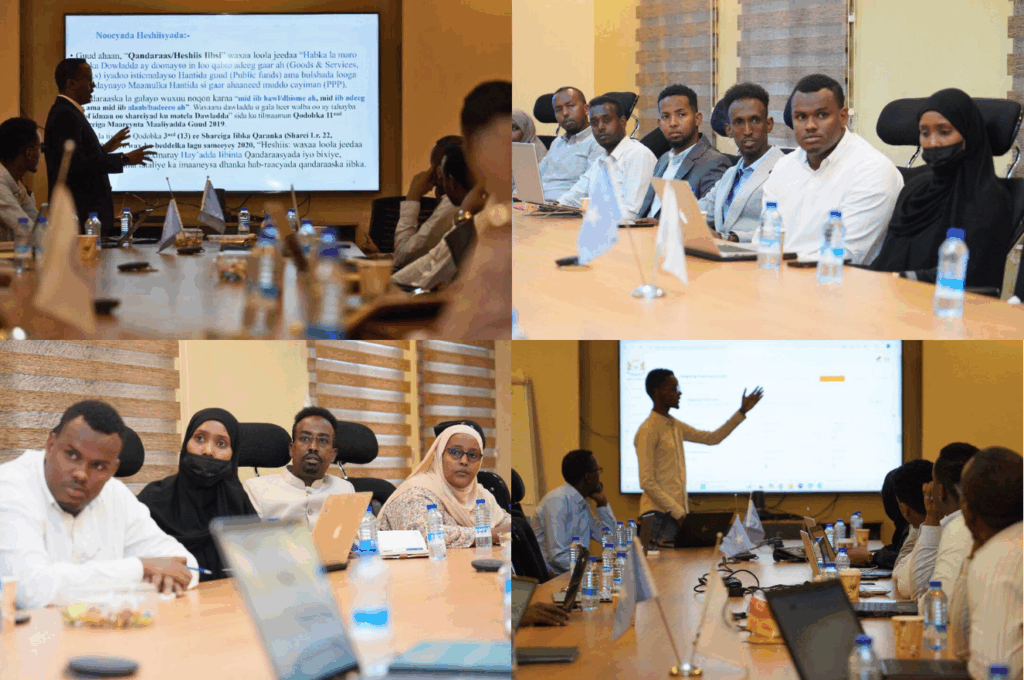
The implementation of the CMS has also had a transformative impact on institutional capacity. The rollout included comprehensive training for OAGS staff, which has improved digital literacy and fostered a culture of continuous learning. This investment in human capital has strengthened the institution’s ability to manage and sustain the system in the long term. Additionally, training sessions extended beyond the OAGS to include staff from other ministries and government departments, helping to institutionalise digital oversight practices across the broader public sector.
Each transaction and modification is meticulously logged by the CMS, creating a tamper-proof audit trail. This has proven particularly useful in tracing contract lifecycles and ensuring that no unauthorised changes go undetected. In practice, this means that every entry in the system is time-stamped and linked to a specific user, enabling forensic-level accountability that was previously impossible. Such traceability is instrumental in post-audit investigations and has strengthened the deterrent effect against manipulation.
Notable Early Successes
Early results have been encouraging. To date, more than 100 contracts have been processed through the CMS, with the average approval time dropping from over 30 days to fewer than 10. The system has already helped flag several contracts for non-compliance, all of which were promptly investigated. This newfound efficiency has translated into faster service delivery across key sectors such as healthcare, education, and infrastructure, where delays can have a direct impact on the well-being of citizens.
In addition, the CMS has facilitated stronger inter-agency coordination. Public institutions now work from a unified source of data, eliminating redundancies and inconsistencies that previously plagued contract management. For example, contracts jointly managed by ministries of finance and health can now be tracked seamlessly through the CMS, allowing for better coordination of procurement timelines, budgeting, and delivery.
One notable case involved a ministry where CMS implementation led to the early detection of cost discrepancies between planned and actual expenditures. By using the CMS’s analytical dashboard, auditors were able to intervene quickly, leading to renegotiations that saved the public treasury considerable funds.
Lessons for the INTOSAI Community
The experience of the OAGS offers practical insights for other INTOSAI members considering similar digital reforms. One critical lesson is the value of starting small. Piloting the system within a limited scope allowed for early identification of issues and gradual refinement before a full-scale rollout. The phased implementation approach ensured that users gained confidence with the system while developers collected feedback to fine-tune its functionalities.
Investment in training proved equally important. Ensuring that both auditors and users understood the system’s functionalities encouraged smoother adoption and more effective usage. A user support team was established to respond to queries, conduct refresher trainings, and gather feedback for continuous improvement. This support system helped bridge the digital divide and encouraged long-term user engagement.
Another key takeaway is the importance of context. While drawing on international best practices, the CMS was tailored to fit Somalia’s legal framework and institutional capacity. This localisation ensured the system’s relevance and usability. Additionally, engaging with stakeholders throughout the design and implementation process fostered a sense of ownership and trust, which has been vital to the system’s success.
For other INTOSAI members, particularly those operating in fragile environments, the Somali experience highlights the feasibility and benefits of digital oversight, even amid resource constraints. By adopting a step-by-step approach grounded in collaboration and context sensitivity, Supreme Audit Institutions (SAIs) can effectively harness technology to enhance accountability.
Looking Ahead: A Vision for Integration and Innovation
OAGS plans to expand the CMS’s integration with other national digital platforms, including public procurement and financial management systems. This will provide a more comprehensive view of public expenditure and strengthen overall accountability in service delivery. The integration of procurement and payment data will allow auditors to trace the full financial lifecycle of a contract – from tendering and selection to disbursement and completion.
Auditor General Gutale has also expressed interest in leveraging advanced technologies such as artificial intelligence and machine learning to further bolster the CMS’s predictive analytics and fraud detection capabilities. These innovations could help detect patterns of irregularities across multiple contracts, offering auditors early warning signals of systemic issues before they manifest as financial losses.
Furthermore, the OAGS is considering the establishment of a public-facing dashboard that would allow citizens and civil society organizations to view key contract information. Such a move would not only promote transparency but also encourage civic engagement in public resource monitoring.
The journey of the OAGS in digitalizing contract oversight demonstrates how technology can empower SAIs to fulfill their mandates more effectively. In a fragile context such as Somalia, the CMS is a powerful example of how innovation, commitment, and collaboration can bring about meaningful institutional change. As reforms continue, the CMS stands as a symbol of Somalia’s determination to build a more transparent, accountable, and efficient public sector.