International Journal of Government Auditing – April 2012
![]() |
|
Carlos Pólit Faggioni Comptroller General of Ecuador and President of the Latin American and Caribbean Organization of Supreme Audit Institutions (OLACEFS) |
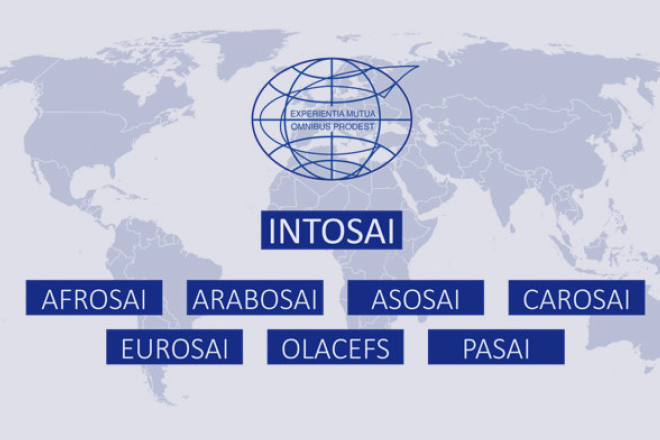
It is a privilege to have the opportunity to share reflections from OLACEFS, the Latin American and Caribbean region of INTOSAI, with other colleagues from around the world through this Journal. I am confident that our thoughts will mirror those of other INTOSAI regions.
I would first like to congratulate the technical and professional efforts of this Journal to promote dialogue on current issues and the modernization of all organizations closely linked with auditing the public sector. The risks that SAIs are exposed to compel us to continually rethink and reshape the role of government audit—whether viewed as that of a simple agent of control or that of a transcendent support to government.
As auditors, we must be prepared to understand human behavior linked to conditions generated by political, economic, technological, and social factors and anticipate future issues if we are to prevent errors or address voluntary actions that can adversely affect the management of the organizations we audit.
But to be able to do this, we must always be ready to learn the lessons that are generated day by day. We must understand that auditing is not an exact and quantifiable science. Rather, auditing has genuinely social dimensions and must begin with the understanding of human beings as the principal actors in society and organizations. (Please see the article “Auditors and Effective Communication Skills” in this issue for an additional discussion on this topic.)